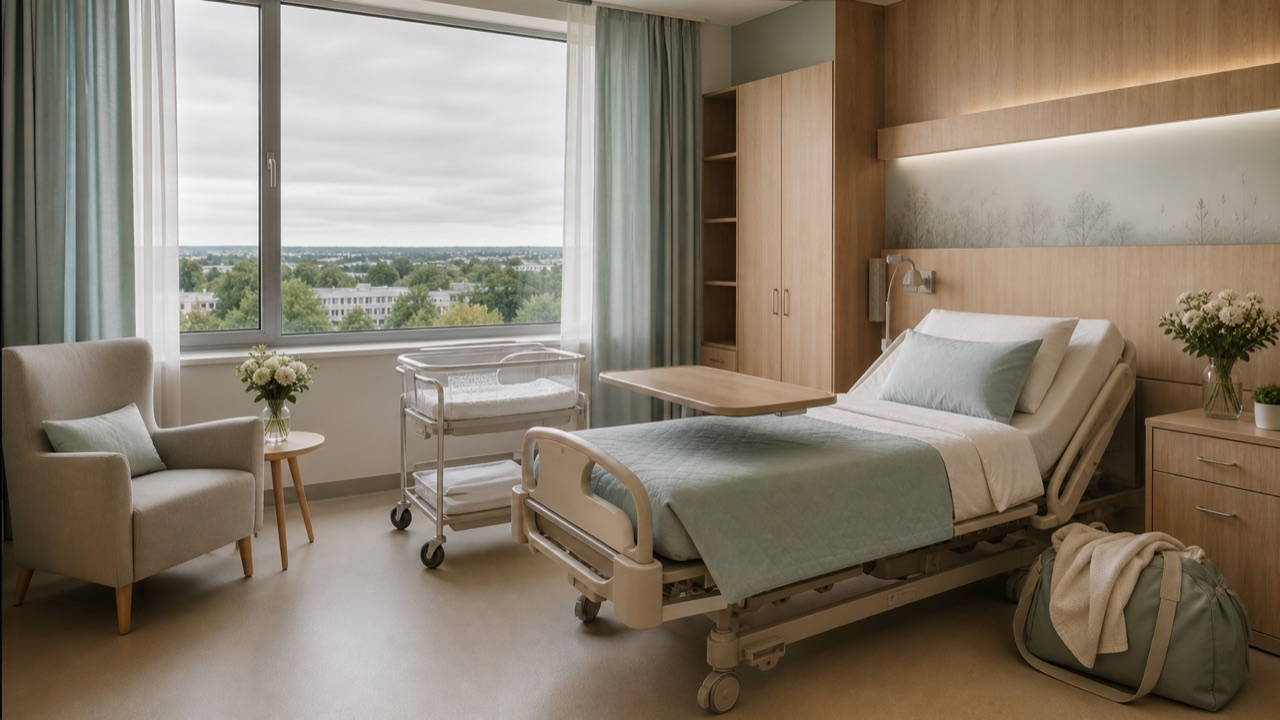
Start with safety, not room photographs
In Latvia, state-funded childbirth care is provided by facilities contracted by NVD. First ask your gynaecologist or midwife whether the pregnancy is low risk and what level of care may be needed. Preterm-birth risk, a multiple pregnancy, placental position, a serious chronic condition or expected specialist newborn care can change the appropriate choice. Ask for a specific recommendation and its reason rather than trying to interpret hospital profiles alone.
Ask whether the specialists relevant to your situation are available around the clock and what happens if mother or baby needs transfer to a higher level of care. Staffing, services and patient flow can change, so confirm decisive details directly with the facility.
Separate state-funded and optional services
NVD states that childbirth care and family birth in a contracted facility are state funded. An enhanced-comfort room, a named clinician and other optional services may carry charges under the hospital's price list. Write down what matters to you and ask staff to distinguish medically necessary care from a paid preference.
Questions to ask include:
- Does the facility currently hold an NVD contract for childbirth care?
- What could incur a fee, and when is an agreement signed?
- Is epidural analgesia available around the clock, and what happens when demand is high?
- Can a private or family room be reserved, or is it allocated only if available?
- Which records and original test results should you bring?
Test the journey and admission route
Drive the route by day and evening, find the maternity admissions entrance and check parking. Outside Riga, consider roadworks, limited public transport and winter conditions. Save the unit's number on both partners' phones and download the route. If you depend on a taxi or relative, prepare an alternative.
Ask when the unit wants you to call and leave home for regular contractions, suspected waters breaking or bleeding. The advice may be individual. For heavy bleeding, unconsciousness, seizures or sudden breathing difficulty, call 113 rather than trying to reach a distant preferred hospital yourself.
Compare the care experience
Safe care also includes understandable communication and participation in decisions. At a visit, open day or by phone, ask two or three facilities the same questions:
- How are movement, birth positions and non-drug comfort measures supported?
- How does the team explain interventions and seek consent?
- What are the companion rules in theatre and after birth?
- How are immediate skin-to-skin contact and first feeding supported when mother and baby are stable?
- What feeding support is available during the day and at night?
- How are language or accessibility needs handled?
Judge answers by their clarity. A promise of one exact birth scenario is not a safety guarantee; clear principles and the ability to adapt are more useful.
Confirm everyday rules
Before deciding, confirm companion requirements, visiting, the packing list, meals, showers, Wi-Fi, photography and discharge arrangements. Ask whether a partner can remain after birth and what a family room costs. These details vary between hospitals and can change with occupancy or infection-control needs.
Reviews can help you form questions, but one person's experience cannot represent the current team, workload or your medical circumstances. Prefer current information from the facility and your maternity clinician.
Build a workable plan B
Choose a backup facility, especially when your first choice is far away. Keep one note with both addresses, admissions numbers, routes and the person who will care for older children or pets. At around week 36, recheck contacts and requirements.
If labour begins unexpectedly or your condition changes, the medically appropriate destination may differ from your original choice. That is not a failed plan—a good plan makes safe adaptation possible.
Call and ask every unit the same questions
Web pages can become outdated, so ask two or three suitable units the same short set of questions. Confirm how admission works by day and at night, which entrance to use, which documents or results the unit asks you to bring and whether you should call before a planned arrival. Ask about the current rules for a support person, which pain relief options are available on site and which choices carry a private charge. If you have a known risk factor, describe it clearly and ask the clinician overseeing your pregnancy which unit can provide the level of care you may need.
Record the answers, the date checked and the contact used because rules, price lists and working arrangements can change. Do not compare distance only in kilometres. Travel the route to the admissions entrance in normal traffic, identify a night-time alternative and estimate the time needed to leave home, reach a car or taxi and travel. Your backup plan should say what happens if the preferred unit cannot receive you at that moment or a clinician recommends another hospital. Discuss the final decision with your maternity-care professional. A robust choice combines clinical suitability, realistic access and the aspects of care experience that matter to you; a hotel-style room or a single online review cannot replace those three checks.
This material is educational and does not replace individual advice from a doctor, lawyer or VSAA.