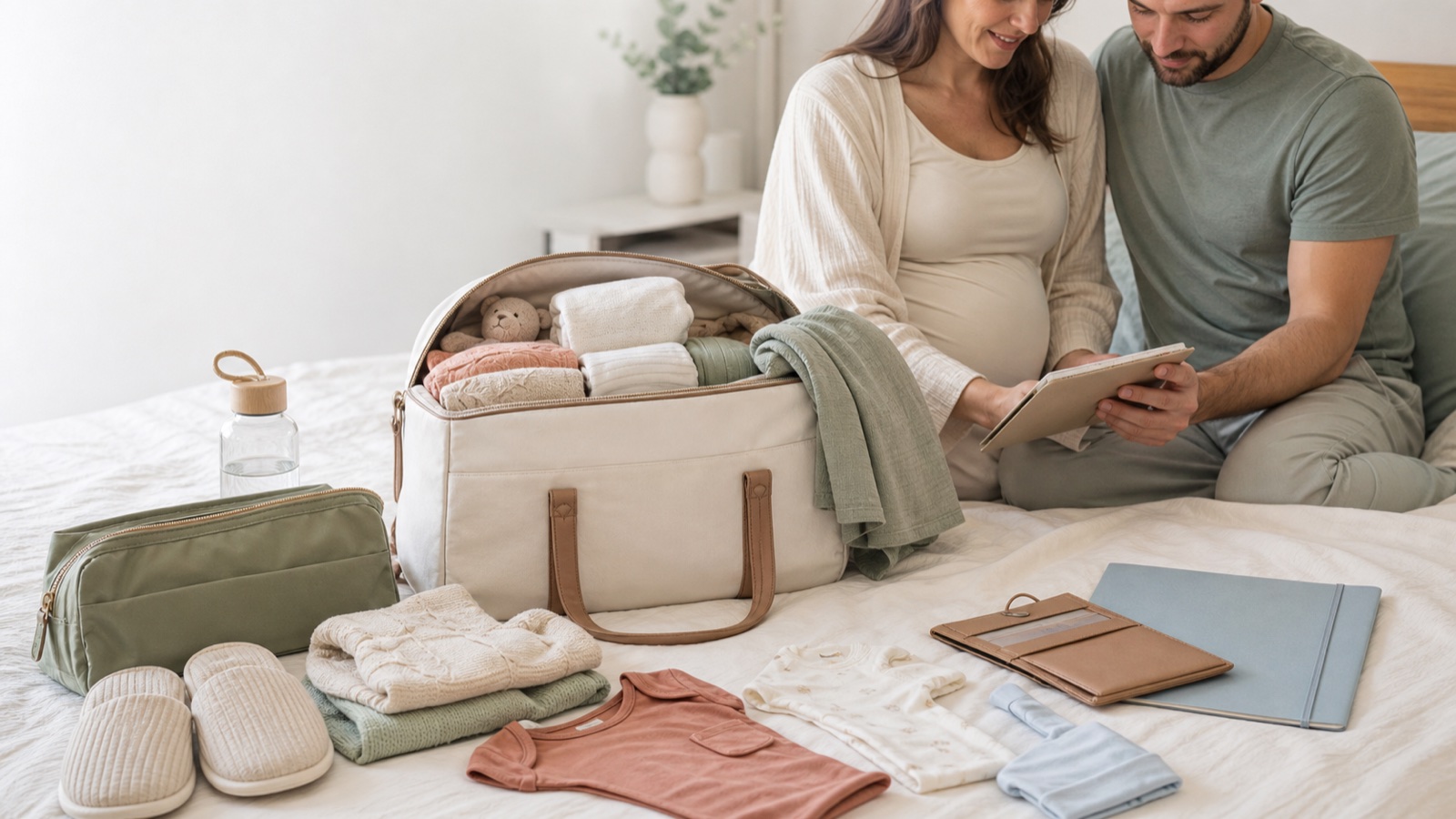
Check your unit's own list first
Packing requirements are not identical across Latvian maternity facilities. Open your chosen hospital's current list, then call to clarify what it supplies for mother and baby, whether it asks for a disposable delivery kit, how many clothing sets to bring and which snacks are allowed. NVD says the cost of the delivery kit is included in the state-funded childbirth tariff, so query any stated compulsory purchase directly with the unit.
Begin around weeks 34–36, or earlier if preterm birth is a concern. Divide belongings into three groups: admission and labour, the postnatal room, and discharge. Label small transparent bags so a partner or member of staff can find each item quickly.
Documents, medicines and communication
Keep these in one accessible folder:
- identification and your Mātes pase maternity record;
- original ultrasound, blood-group and Rhesus-factor reports if they were given to you;
- important records or results not available through E-veselība;
- a medicine, dose and allergy list;
- a copy of your birth plan and key contacts.
Keep regular medicines in original packaging and tell admissions staff about them; do not take your own supply in hospital without agreement. Save the admissions number, address and backup route on your phone. Bring a long charging cable and a power bank if available.
For labour and comfort
Choose simple, washable, loose items: a nightdress or long T-shirt, robe, non-slip slippers, warm socks, hair tie and lip balm. A bottle with a sports cap is easy to use while reclining. Confirm the unit's approach to light snacks and drinks, because clinical circumstances can change advice.
Headphones, a small speaker, massage ball or familiar pillowcase may help, but check what the unit permits. Do not bring candles, strong fragrances or bulky equipment without agreement. Keep glasses in a hard case; contact-lens users should also pack glasses and lens supplies.
For the mother's postnatal stay
Pack two or three comfortable nightdresses or pyjamas with easy front access, a soft bra, several pairs of high-rise cotton or disposable underwear, and going-home clothes that fitted late in pregnancy. Add a toothbrush, toothpaste, mild wash, hairbrush, towel and a bag for laundry.
Compare quantities of maternity pads, disposable bed pads and breast pads with the hospital list. For a planned caesarean, choose underwear whose edge will not rub the wound area. A small empty pouch by the bed keeps your phone, water and tissues within reach.
For baby and a safe journey home
Confirm quantities and sizes with the unit. Several bodysuits or vests, sleepsuits, socks, a hat, nappies, waterproof pads and a blanket are commonly practical. Pack light layers instead of one very thick outfit, and match discharge clothes and covers to the season.
If travelling by car, install a rear-facing infant seat appropriate for the baby's size before labour and follow its manual. Do not place a thick snowsuit under the harness; add warmth over the correctly secured baby. If you will not use a car, plan safe transport and a helper in advance.
The partner's bag and final check
A companion may need identification, a change of clothes, suitable indoor shoes, toiletries, water, permitted snacks, a charger and a payment method. Companion requirements, overnight stays and meals vary, so reconfirm them directly with the hospital.
Leave a short exit checklist by the door: document folder, phones, medicines, water and discharge bag. Keep jewellery, large amounts of cash and unnecessary electronics at home. Every few weeks, recheck documents, baby sizes, seasonal clothing and the power-bank charge.
Pack by stage and show the bag to your support person
Several small, clearly labelled bags are more useful than one very long list. Keep identification and individually relevant medical information in one transparent folder. Use separate pouches for admission and labour, the first postnatal day and one complete set of baby's clothing. Your telephone, charger, water and regular medicines should be reachable rather than buried at the bottom of a suitcase. Keep medicines in their original packaging and ask the unit beforehand how they will be managed during the stay.
Your support person should know where each group is located because the labouring woman should not have to direct a search during contractions. Rehearse one simple scenario together: where the documents are, what must be carried immediately, what can remain in the car and where the infant car seat is kept. Avoid large amounts of cash, jewellery, unapproved heating devices, strong fragrances and numerous products bought “just in case”. If the unit provides nappies, linen or postnatal hygiene supplies, there is no advantage in duplicating the entire stock. Make the final check against the chosen hospital's current list rather than a random social-media video. Leave a little free space for documents or belongings received during discharge; an organised, carryable bag is safer and calmer than the largest possible bag.
This material is educational and does not replace individual advice from a doctor, lawyer or VSAA.